

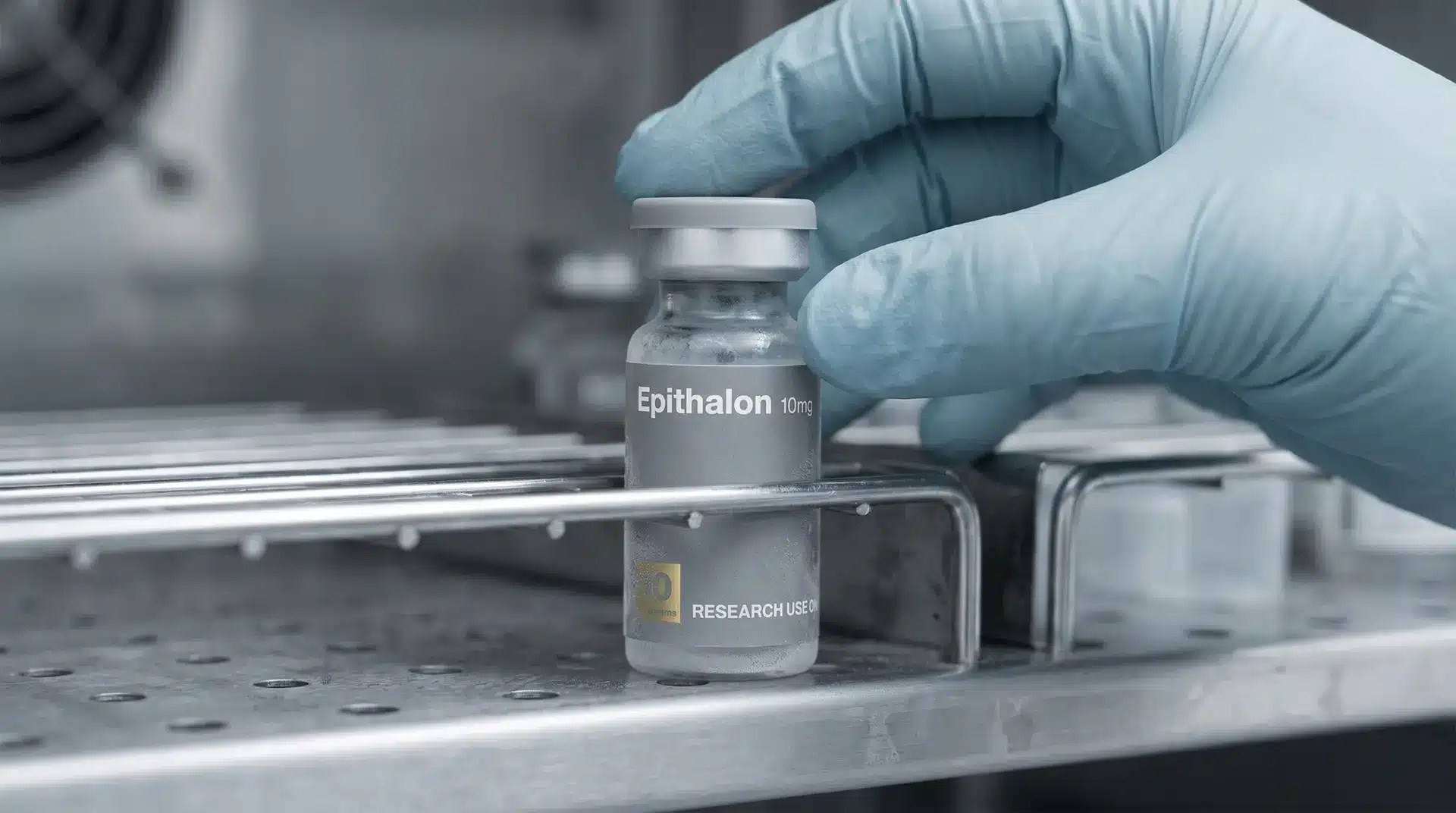
Even a properly made, verified compound can let a study down if it isn't stable. Stability — a compound's ability to keep its structure and activity over time — is one of the biggest drivers of accuracy and reproducibility in laboratory research, including work with peptides.
Stability is the ability to hold onto molecular integrity and consistent activity, resisting degradation so results stay reproducible. When a compound degrades, its behavior changes.
Degraded material can show reduced activity, inconsistent results, unexpected pathway responses, and data that's easy to misinterpret. Stable material keeps the data pointing at the real compound, not an unknown breakdown product.
Peptides are generally more sensitive — prone to enzymatic degradation and hydrolysis, especially once reconstituted. Small molecules tend to be sturdier but can still oxidize or photodegrade.
HPLC and mass-spec results, and the COA, describe a compound at the moment of testing. They don't guarantee it stays that way — storage after testing is what preserves that verified purity.
This article is for general educational purposes only and is not medical, health, or professional advice.
Related reading: HPLC Testing & Certificates of Analysis · Multi-Compound Research · What Is Bacteriostatic Water?